|
| |
| |
|---|
|
| |
| |
|---|
Truck Parts & Their Functions
Body, Frame & Suspension
| Item | Sample Picture | Function |
| Air Springs |  | Air springs compensate for changes in road conditions and vehicle load, maintaining vehicle height. The air springs also absorb road shock. |
| Axle Stop / Axle Bump Stop | 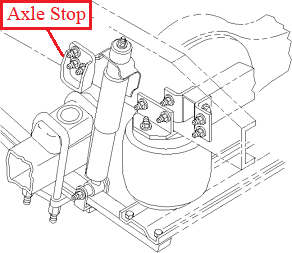 | An axle stop / axle bump stop consists of a weight-optimized metal and rubber component to protect the vehicle from being damaged from overload. |
| Bumper |  | A bumper is a bar attached transversely in front of or behind a car body to prevent contact between an obstruction and the car body or to cushion the shock of collision between vehicles. |
| Camber Angle | 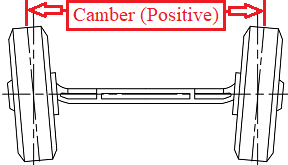 | Camber angle is the vertical tilt of the wheel as viewed from the front of the vehicle. Camber angle is measured in degrees, and is not adjustable. Positive camber is the outward tilt of the wheel at the top. Excessive positive camber in one wheel causes the vehicle to pull in the opposite direction, rapidly wearing the outboard side of the tire tread. Negative camber is the inward tilt of the wheel at the top. Excessive negative camber in one wheel causes the vehicle to pull to the same side that the negative-camber wheel is on, wearing the inboard side of the tire tread. If camber angles are not correct, the tires will wear smooth around the edge on one side. |
| Caster Angle | 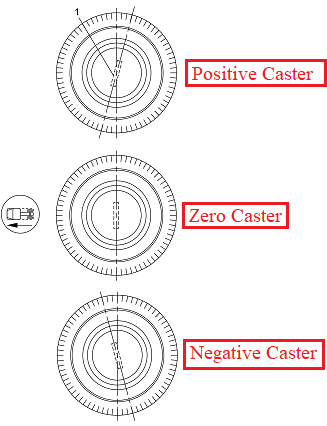 | Caster angle is the tilt of the knuckle pin (or kingpin) as viewed from the side. Caster angle is measured in degrees and it is adjustable. A positive caster angle is the tilt of the top of the knuckle pin toward the rear of the vehicle. A negative caster angle is the tilt of the top of the knuckle pin toward the front of the vehicle. Caster angles are based on the design load of the vehicle. An incorrect caster angle does not cause tire wear. However, a positive caster angle that exceeds specifications could cause vehicle shimmy, road shock, and an increased steering effort. A negative caster angle that does not meet specifications could cause unstable steering. |
| Frame Rail & Crossmember | 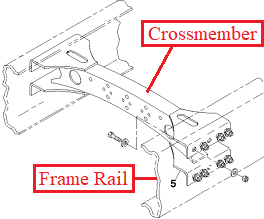 | The main body of the frame consists of two frame rails connected by a series of crossmembers. The frame supports the rest of the chassis and body. |
| Frame Rail Bracket | | Attaches the bumper to the frame rail |
| Height Control Valve |  | A height control valve regulates the air flow into or out of all the air springs. As the air spring compresses or expands, changes in the clearance between the vehicle frame and the differential housing activate the height control valve. |
| Leaf Spring | 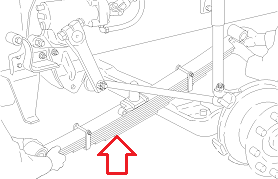 | The leaf spring assembly absorbs and stores energy over bumps, releasing it at a controlled rate to smooth the ride. Individual spring leaves are held together by a center bolt. Alignment clips limit the sideways spread and vertical separation of the individual leaves. |
| Shock Absorber | 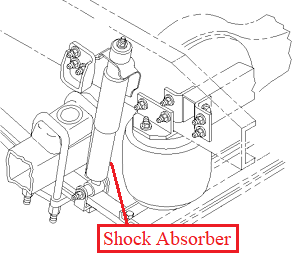 | Shock absorbers work with the truck's suspension system to maintain tire-to-road contact by controlling spring movement. |

